Keynote Speakers
Distinguished experts and thought leaders in structural steel
engineering.
(Last name from A to Z)
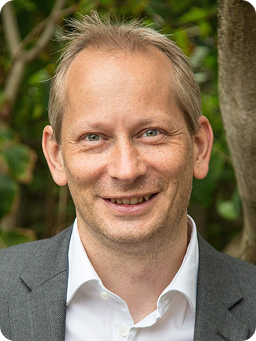
Professor Leroy Gardner
Imperial College London, England
Brief Bio:
Leroy Gardner is Professor of Structural Engineering at Imperial College London and a Fellow of the Royal Academy of Engineering. Prof. Gardner's principal research interests, in respect of which he has co-authored 4 textbooks, 7 book chapters and over 400 technical papers, lie in the areas of structural testing, numerical modelling and the development of design methods for steel structures.
Prof. Gardner is Editor-in-Chief of two international journals and serves on the Editorial boards of five others. He chairs a number of IStructE and BSI committees, is the UK National Representative on the European Working Group for the structural steel design standard EN 1993-1-1, and is a Fellow of both the Institutions of Civil (FICE) and Structural Engineers (FIStructE). Prof. Gardner was awarded the IABSE prize in 2017 and the ASCE Shortridge Hardesty prize in 2021.
The Steel Structures Group comprises about 20 doctoral and post-doctoral researchers working on a range of topics relating to the manufacture, testing, simulation and design of steel structures. Active topics include metal additive manufacturing (3D printing), design by advanced analysis, stainless steel, high strength steel, cold-formed steel and aluminium alloy structures. The Steel Structures Group was awarded the 2024 Imperial President's Excellent Research Team Prize in 2024.
Professor Tan Kang Hai
Nanyang Technological University, Singapore

Brief Bio:
Prof Tan Kang Hai is Director of Protective Technology Research Centre (PTRC) in CEE School. Prof Tan’s research work formed the technical basis of the circular from Singapore Civil Defence Force (SCDF) on “Fire Safety Design of Multi-storey steel-framed buildings with composite slabs”. In 2014, he secured an MND fund to develop a safe and cost-effective design for Singapore’s mega underground cavern developments. The research resulted in an innovative design concept for underground life safety and technical disclosures for fire protection coating and cementitious concrete composites.
Professor Tan has authored nearly 230 SCI-top tier international journal papers, with over 7,209 citations (h-index 47), and has delivered more than 60 keynote and invited lectures worldwide, along with extensive professional training courses.
Professor Tan is a registered Professional Engineer in Singapore and a Specialist PE in Protective Security, he serves on multiple national advisory, standards, and review panels related to structural safety and infrastructure protection. He is a specialist consultant to HDB on a PPVC project and Changi Airport Group on Terminal 5. His motto is that research through laboratory testing of structures and mechanical models should translate into practical design guides and influence engineering practice.
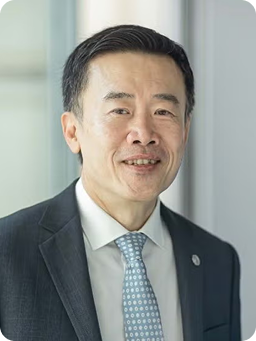
Professor Richard Liew
National University of Singapore, Singapore
Brief Bio:
Jat-Yuen Richard Liew, PhD, PEng, SPE(SP, IstructE, CEng, ACPE, FSEng is a Professor and Head of the Department of Civil and Environmental Engineering at the National University of Singapore. He received his BEng (First Class) and MEng from NUS and his PhD from Purdue University, where his work on advanced frame analysis contributed to Eurocodes and AISC design specifications. His research focuses on steel and steel–concrete composite structures for high-rise and large-span applications in the building, offshore, and defence sectors.
Professor Liew is a Fellow of the Singapore Academy of Engineering and holds professional and chartered engineer registrations in Singapore, the UK, and the Association of Southeast Asian Nations. He is a past President of the Singapore Structural Steel Society and an elected member of the Singapore Professional Engineers Board (2021–2026).
He has authored over 400 publications, including books and book chapters, delivered more than 100 keynote and invited lectures, and serves on the editorial boards of seven international journals. Prof Liew represents Singapore’s constructional steel industry and engineering professions on a number of national and government committees. Prof Liew worked with Singapore Government Agencies to enhance the blast and fire performance of steel and concrete structures.
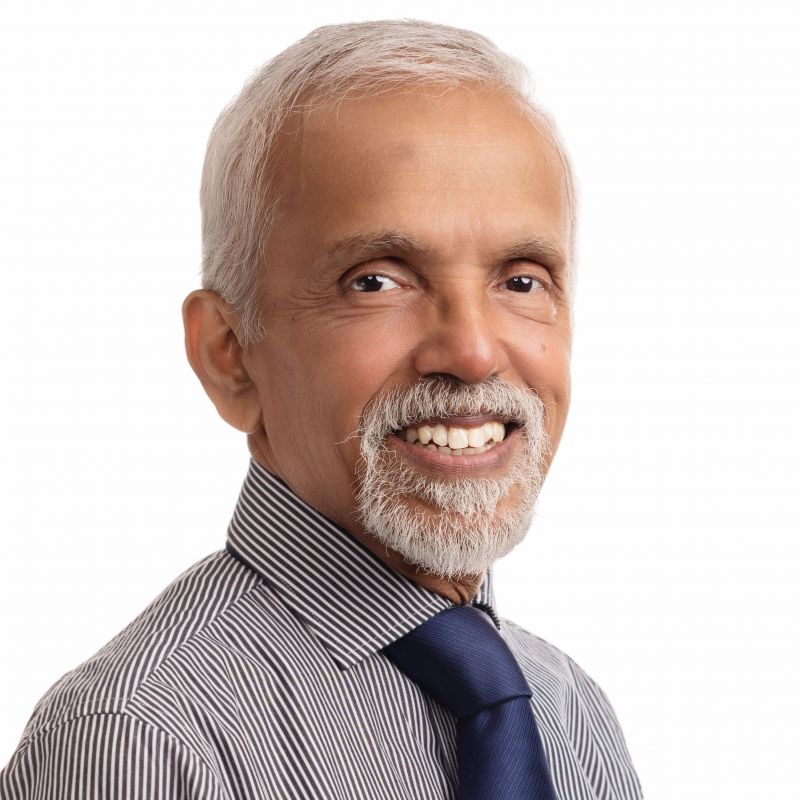
Professor Mahen Mahendran
Queensland University of Technology, Australia
Brief Bio:
Mahen Mahendran is a Professor of Structural Engineering in the School of Civil Engineering and Built Environment at the Queensland University of Technology. He and his research team have developed advanced structural, fire and wind testing facilities at QUT, including full scale testing facilities for low-rise buildings under wind loads, air-box facilities to test cladding systems, and fire testing facilities for columns, walls and floors. Prof. Mahen's research investigates and advances knowledge in the fields of thin-walled steel structures, cyclone/storm resistant buildings and fire safety. He is well recognised nationally and internationally as reflected by many awards, invitations to present research papers, seminars and workshops. Mahen collaborates with international researchers from Germany, The Netherlands, China and Sri Lanka and has strong linkages with the Australian steel industry to enhance and apply the practical relevance of his research. These strong relationships have created an environment where industry has adopted and benefited from his research. Mahen consults widely, and presented workshops and continuing education courses in Australia & overseas to engineers and manufacturers, newspaper articles and radio and national TV interviews. His work has assisted in improving the quality of steel design education for undergraduates and engineers in Australia.
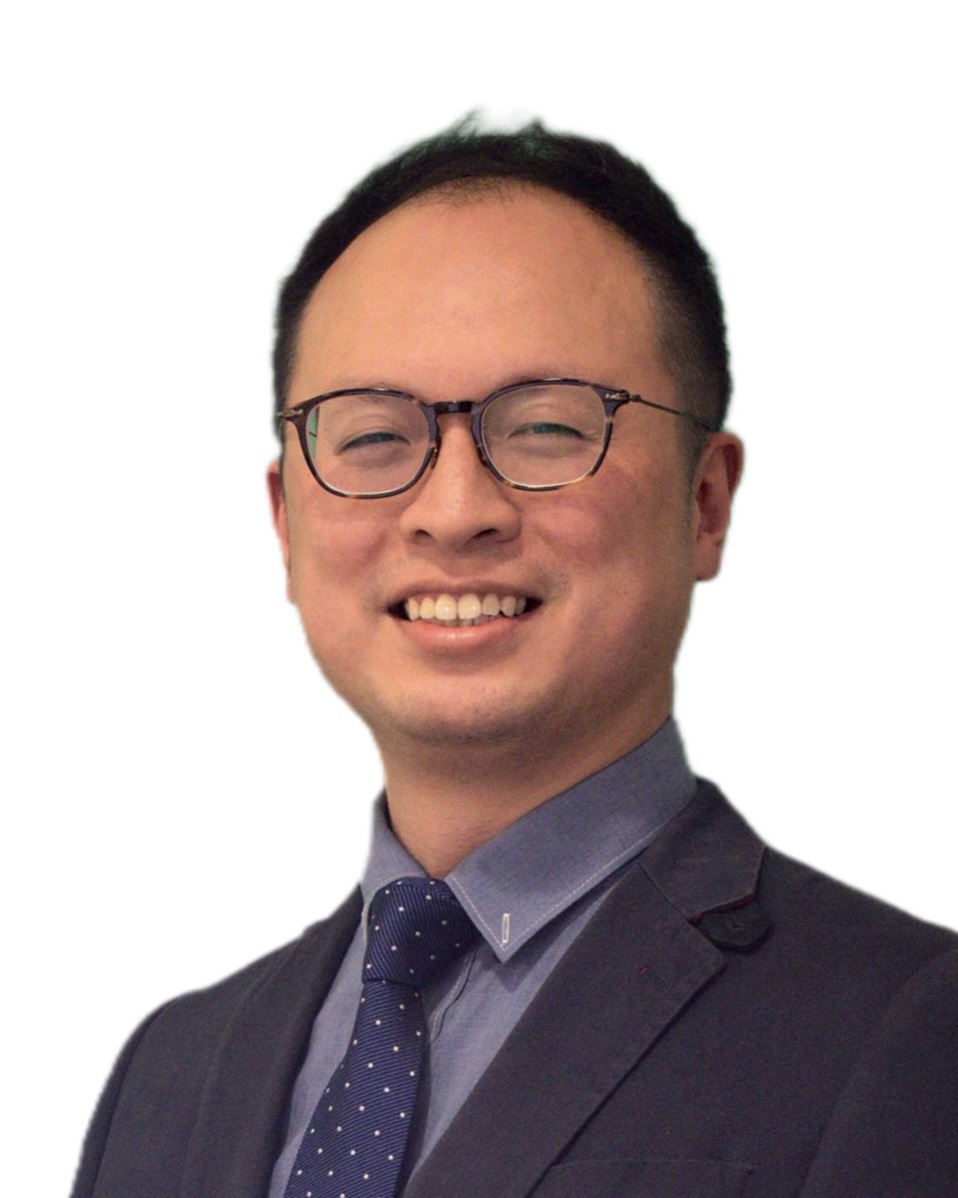
Professor Tak-Ming Chan
The University of Hong Kong, Hong Kong (SAR), China
Brief Bio:
Tak-Ming Chan is Professor of Structural Engineering at The University of Hong Kong and a Fellow of the Institution of Structural Engineers. He serves as Editor of Thin-Walled Structures and currently leads a major Research Impact Fund project supported by the Research Grants Council on "Achieving the Circular Economy in Construction through Deconstruction and Reuse Technologies for Steel and Composite Structures".
Professor Chan is the 2022 recipient of the prestigious award, The Nishino Prize, which is presented by the East Asia-Pacific Conference on Structural Engineering and Construction (EASEC). His research achievements have also been recognized by numerous awards from the Hong Kong Institution of Engineers and the Institution of Structural Engineers in United Kingdom, and he has received multiple awards in teaching and knowledge transfer, including a Gold Medal at the 49th International Exhibition of Inventions Geneva, 2024. He has also been on the 2024 Stanford’s List of World’s Top 2% Scientists (Career).
He holds a first-class honours degree in Civil Engineering from the University of Hong Kong, an MSc in Structural Steel Design and a PhD in Tubular Structures from Imperial College London, and a Postgraduate Certificate in Academic and Professional Practice from the University of Warwick.
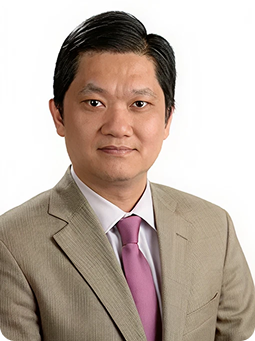
A/Professor Cao Hung Pham
The University of Sydney, Australia
Brief Bio:
Associate Professor Cao Hung Pham is a Senior Lecturer in Structural Engineering at School of Civil Engineering, the University of Sydney. He was awarded a PhD on Cold-Formed Steel Structures from School of Civil Engineering, the University of Sydney in 2010. From 2011 to 2015, he was awarded the prestigious ARC Australian Postdoctoral Fellowship on the development of newly developed Direct Strength Method for Cold-Formed Steel Structures under combined actions.
He was appointed to a continuing academic position as Lecturer in School of Civil Engineering, the University of Sydney since 2013 and Senior Lecturer in 2018. Associate Professor Pham’s main research areas are theoretical and experimental structural behaviours and designs with particular interest in steel structural members and systems, cold-formed steel structures, aluminium structures and structural stability and analysis.
He teaches advanced steel structures and was successful in three ARC Discovery Projects, one ARC Linkage Project with BlueScope Steel, one ARC Research Hub for Australian Steel Innovation, and one Innovation Connections Grant. He is a member of the Editorial Boards of the Thin-Walled Structures Journal and Journal of Science and Technology in Civil Engineering.
Professor Kim Rasmussen
The University of Sydney, Australia
Brief Bio:
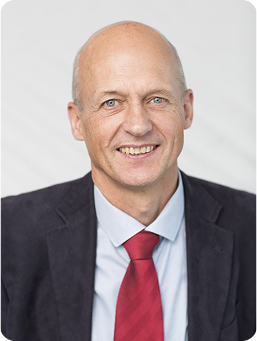
Kim Rasmussen is Challis Professor of Civil Engineering at the University of Sydney. He obtained his MSc in Engineering from the Technical University of Denmark, and his PhD and higher doctorate (DEng) from the University of Sydney. He joined the School of Civil Engineering in 1989, and served as Head of School from 2005 until 2016. He was Deputy Dean and Associate Dean Research from 2016 to 2022, and acted as Interim Dean from 1 Jan 2018 to 30 June 2018.
Prof. Rasmussen is a past chairman of the Centre for Advanced Structural Engineering. He serves on the editorial boards of leading international journals and has been a member of the Australian Research Council's Engineering, Information and Computing Sciences Panel. He also continues to work as an active national and international consultant to industry. In 2020, he was awarded the Lynn Beedle Award by the Structural Stability Research Council (SSRC) as a “world-renowned authority on the field of structural stability".
Prof. Rasmussen's research areas are theoretical and experimental structural mechanics as applied to steel structural members and systems, cold-formed steel structures, stainless steel structures, aluminium structures, and structural stability and analysis. He is currently the leading Chief Investigator on ARC research projects related to built-up midrise buildings, reliability and design of 3D printed metal structures, and limit state analysis of steel structural framework including fracture.
Professor Dipti Ranjan Sahoo
Indian Institute of Technology Delhi, India
Brief Bio:
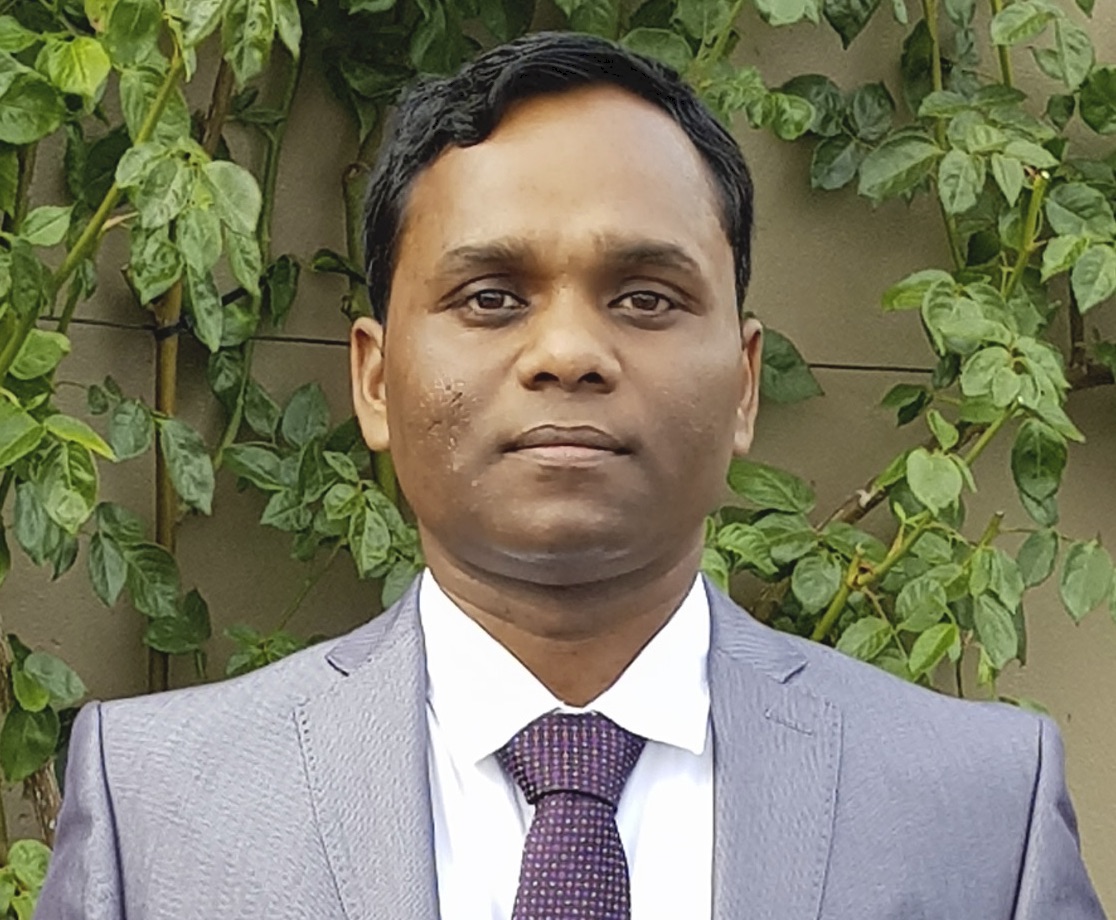
Dipti Ranjan Sahoo is Dean (Infrastructure) and Professor in the Department of Civil Engineering at Indian Institute of Technology Delhi, New Delhi, India. He was a Faculty of National Institute of Technology Kanpur and has also served as a Post-Doctoral Fellow at the University of Texas at Arlington.
Professor Sahoo's research focuses on performance-based earthquake engineering, hybrid simulation and testing, seismic fragility assessment, Finite element modelling, Passive vibration control, Fiber-reinforced concrete, High-strength materials, Steel-concrete composite structures, Seismic strengthening techniques, and Structural fire engineering. He has published over 250 research articles, holds seven patents on earthquake vibration control devices, and is the author of the textbook Fundamental Structural Analysis (PHI, India).
He is the recipient of the most-prestigious Shanti Swarup Bhatnagar Prize (2022) in Engineering Sciences and is an elected Fellow of INAE, ICE (UK), Institute of Engineers (India), and Indian Society of Earthquake Technology (ISET). He is a recipient of INAE Young Engineer Award, IEI Young Engineer Award, SERB Young Scientist Award and BRNS Young Scientist Research Award.
Professor Brian Uy
University of New South Wales, Australia
Brief Bio:
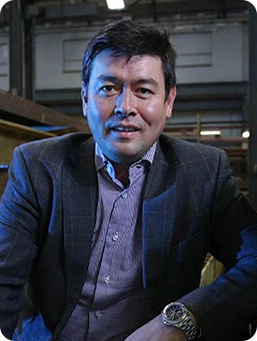
Professor Brian Uy is a Scientia Professor of Structural Engineering (appointed 2023) and a globally recognised leader in steel and composite structures research with over 30 years of experience. He previously served as Professor of Structural Engineering and Dean of Engineering at Western Sydney University.
Professor Brian Uy is the 105th President of the Institution of Structural Engineers in 2026. Prof. Brian was also elected Vice President of the International Association for Bridge and Structural Engineering (IABSE) in 2023. His honours include the Sir John Holland Civil Engineer of the Year Award (2018), the John Connell Gold Medal – Structural Engineer of the Year Award (2021), and was elected a Fellow of ATSE and the Royal Society of New South Wales.
Brian and his team’s research has been highly cited in the area of steel-concrete composite structures, steel structures, structural engineering and civil engineering. He has received over 20,000 citations in Google Scholar with a h index of 79 (m index = 2.5) and has a personal Relative Citation Index (RCI) and Field Weighted Citation Index (FWCI) over 2.0. He has also been ranked 1st in Australia and 5th in the world in the area of High-strength low-alloy steel, 26th in the world in Structural engineering and a Highly Ranked Scholar by Scholar GPS in 2024 (i.e., top 0.05% in the world).
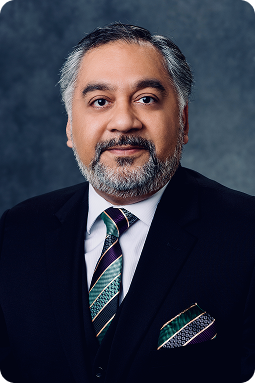
Professor Amit H. Varma
Purdue University, Indiana, USA
Brief Bio:
Amit H. Varma is the Karl H. Kettelhut Professor of Civil Engineering at Purdue University and Director of the Robert L. and Terry L. Bowen Laboratory for Large-Scale Civil Engineering Research. He received his BTech in Civil Engineering from Indian Institute of Technology Bombay, and his MS and PhD in structural engineering from the University of Oklahoma and Lehigh University, respectively.
Prof. Varma's research focuses on the development and large-scale testing of innovative steel–concrete composite structures for buildings, and industrial structures such as nuclear power plants. His work addresses structural performance under extreme loading conditions, including seismic, fire, blast, impact, and fatigue. The outcomes of his research form the technical basis of several AISC design codes and specifications used in the United States and internationally.
Prof.Varma has conducted extensive experimental and numerical investigations on composite members, connections, and systems, and is widely recognised for his contributions to resilient and safety-critical infrastructure design. He recently received AISC Special Achievement Award which is recognized for his groundbreaking work in developing and promoting Speed Core, a concrete-filled composite plate shear wall system that is revolutionizing the speed at which steel-framed buildings are constructed. His research and lab tests on tall shear walls significantly contributed to the successful implementation of the system.
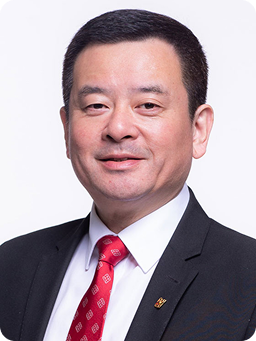
Professor Ben Young
The Hongkong Polytechnic University, Hong Kong (SAR), China
Brief Bio:
Professor Ben Young is Vice President (Student and Global Affairs) and Chair Professor of Steel Structures at The Hong Kong Polytechnic University. He develops strategies for student development, global engagement, and international partnerships. Prof. Young served as Professor of Structural Engineering at The University of Hong Kong from 2005 to 2018. He was previously an adjunct professor at Zhejiang University and a guest professor at Tongji University.
Professor Young's research interests include cold-formed steel, high-strength and stainless steel structures, aluminium structures, structural stability, and the resilience of metal structures. He is Co-Editor-in-Chief of the Journal of Constructional Steel Research, Elsevier. He also serves as a member of editorial boards for several SCI-indexed journals. Professor Young has published over 750 international journal and conference papers, of which over 410 are SCI-indexed journal papers. He has an h-index of 80 in Scopus. According to the ISI’s essential science indicators, Professor Young has been listed by Clarivate Analytics as among the “Top 1% scholars” worldwide by citations for many years. with a citation impact factor of 4.347 and h-index of 92.
Professor Young received the Best Paper awards from the Journal of Structures and Journal of Engineering Structures, Elsevier, in 2016 and 2024, respectively. In 2020, he received the Shortridge Hardesty Award from the American Society of Civil Engineers for his research contributions to the stability design of cold-formed steel and stainless steel structures.
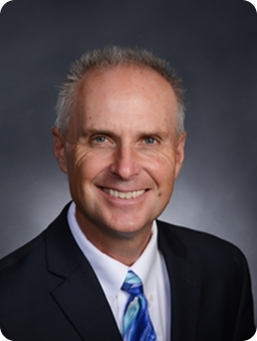
Professor Ronald Ziemian
Bucknell University, Pennsylvania, USA
Brief Bio:
Ron Ziemian is a structural engineer and Professor of Civil Engineering at Bucknell University. He has authored over 100 publications on the analysis and design of steel and aluminium structures, co-authored the textbook Matrix Structural Analysis (Wiley, 2000), the developer of the educational analysis software MASTAN2 and the editor for the 6th edition of the Guide to Stability Design Criteria for Metal Structure (Wiley, 2010)
He is the former Co-Editor in Chief of Elsevier’s Journal of Constructional Steel Research, and as a registered professional engineer currently serves as the technical consultant to the Aluminum Association. He has played a significant role in the development of building codes, evidenced by his contributions as a member of AISC’s, AISI’s, and AA’s specification committees, and he was the former chair of the Structural Stability Research Council.
Ron has received several national awards, including the ASCE Norman Medal, the AISC Special Achievement Award, the ASCE Shortridge Hardesty Award, the AISC TR Higgins Award, the SSRC Lynn S. Beedle Award, and an AISC Lifetime Achievement Award, for his contributions to the profession related to the stability analysis and design of metal structures. He is also a recipient of Bucknell University's Presidential Award for Teaching Excellence and a Presidential Professorship.